Our Vision
A medical regulatory system in which patients have access to high-quality health care, and the integrity of the practice of medicine is protected
Our Mission
To serve as a national voice for state medical boards, supporting them with services and initiatives that promote patient safety, the integrity of the practice of medicine, access to high-quality health care and regulatory best practices
History
Since our founding in 1912, FSMB has served as a forum for connecting state medical and osteopathic boards to share best practices and discuss issues of medical regulation. We provide educational materials, assessment tools, data access, technology solutions, and more — continuing to serve the interests of FSMB’s member boards and support their integral function within America’s healthcare system.
State licensing laws enacted in the late 19th century established medical boards to license and discipline physicians within each state and territory. What began as a small annual meeting of board executives has evolved into a vibrant national body with more than 100 employees based in Texas and Washington, D.C. The FSMB champions the interests of state medical boards nationally, shaping policies and practices that impact the entire medical profession.
Read on to learn more about how the FSMB has grown and impacted the practice of medicine in the United States.

1912
The FSMB is established through a merger of the National Confederation of State Medical Examining and Licensing Boards and the American Confederation of Reciprocating Examining and Licensing Medical Boards.
(Pictured: Drs. George Matson and Beverly Drake Harrison, presidents of the National and American Confederations respectively.)
1913
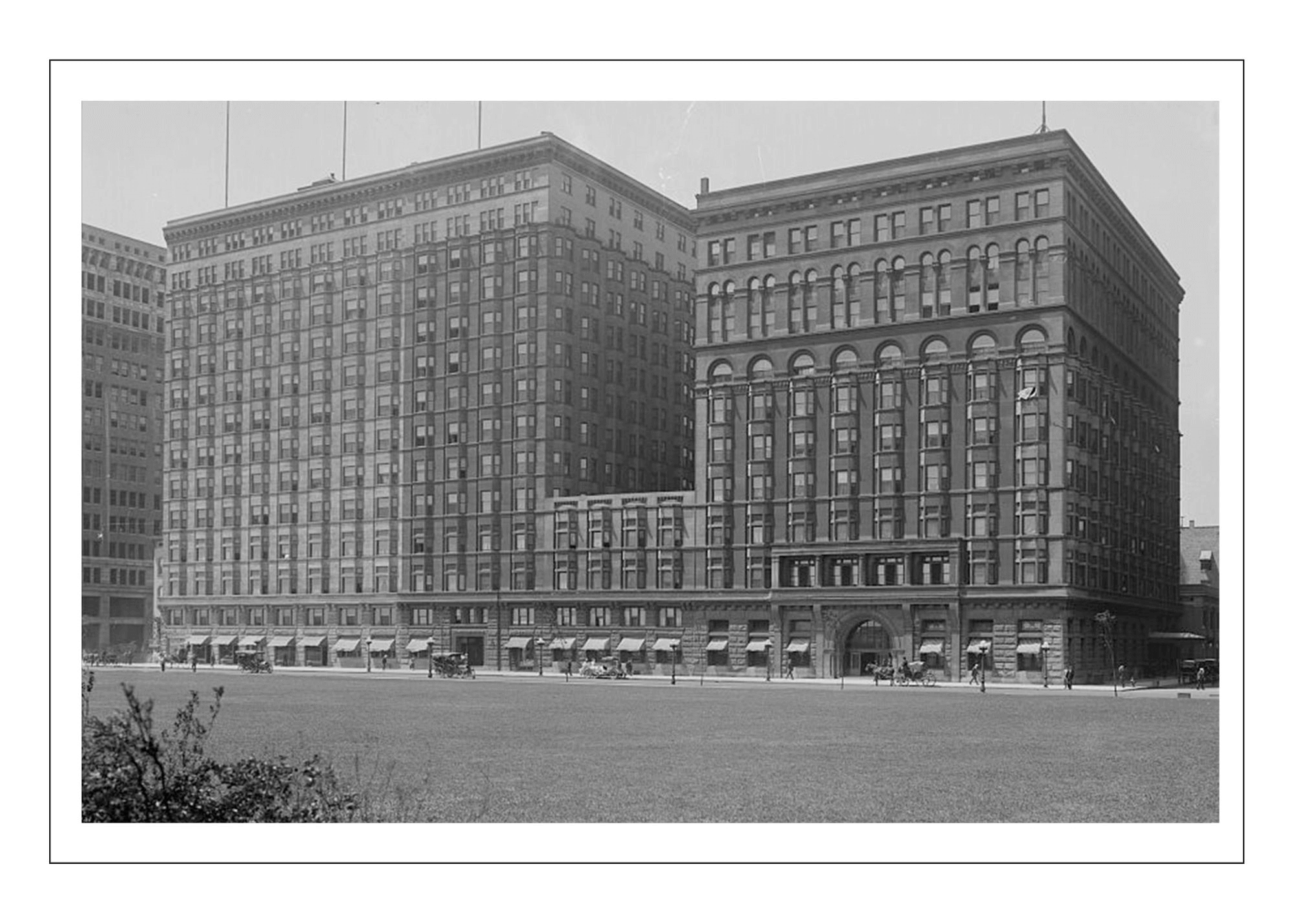
The first edition of the FSMB's Quarterly (now known as the Journal of Medical Regulation) is published. The organization also hosts its first Annual Meeting in conjunction with the American Medical Association (AMA) meeting in Chicago, a practice that continues until 1982.
(Pictured: The Congress Hotel, site of the FSMB Annual Meeting for over twenty years.)
1956
The FSMB publishes its first model policy, “The Essentials of a Modern Medical Practice Act,” making it available to state medical boards. The FSMB has since drafted model policies on a range of medical regulatory issues.

1962
The Board Action Data Bank, a repository for disciplinary actions taken by state medical boards, is launched. By 1981, all state medical boards report to the data bank.
(Pictured: FSMB Board Actions file room)
1966
The FSMB formally incorporates as a nonprofit 501(c)(6) organization.
1968
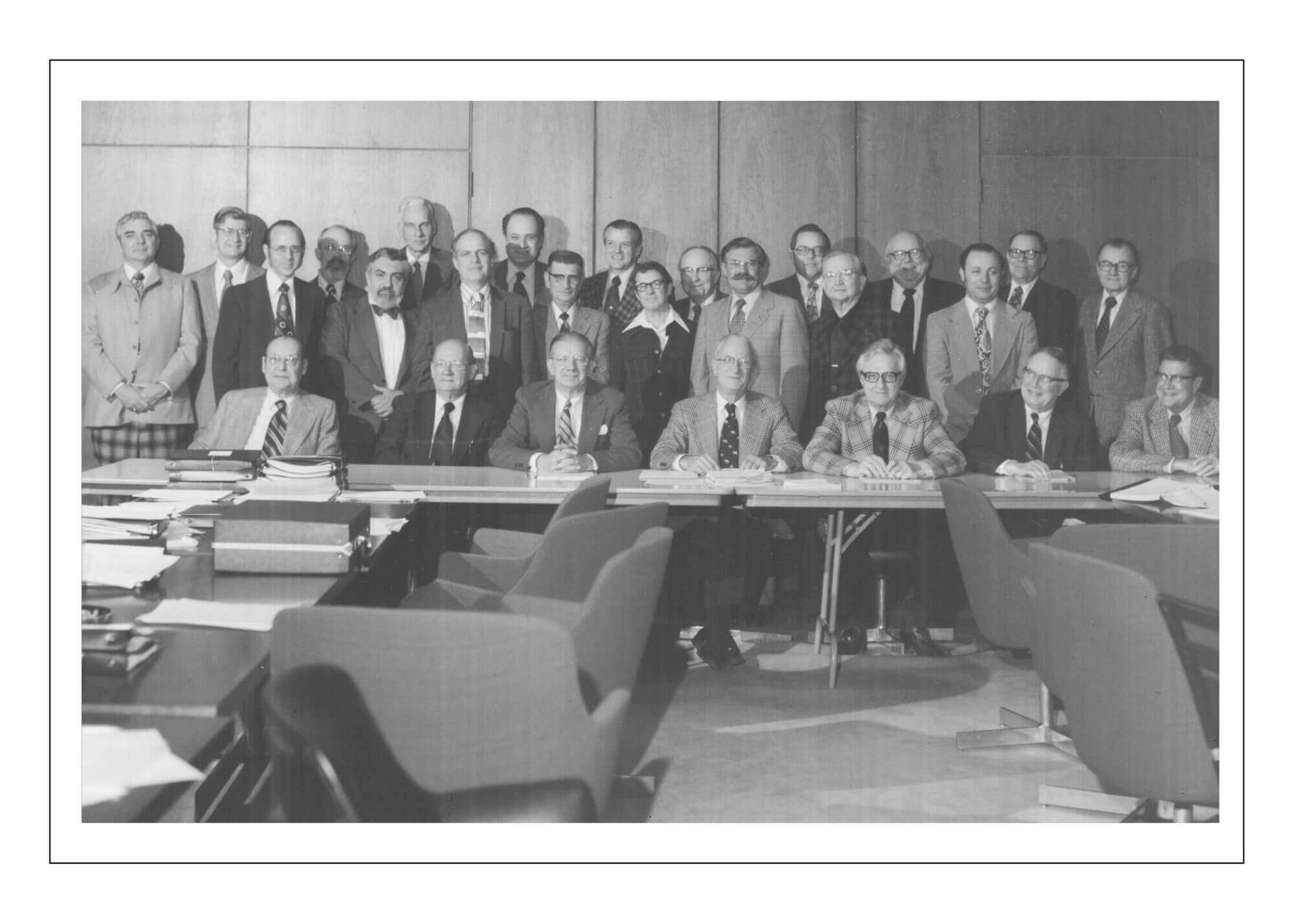
The Federation Licensing Examination (FLEX) is administered for the first time to assess international medical graduates for initial medical licensure. By 1979, all 50 states use FLEX and a revised assessment is introduced in 1985.
(Pictured: 1976 FLEX Board)
1980
The FSMB Foundation is established to support and promote research and education initiatives that strengthen the safety and quality of healthcare through effective medical regulation.
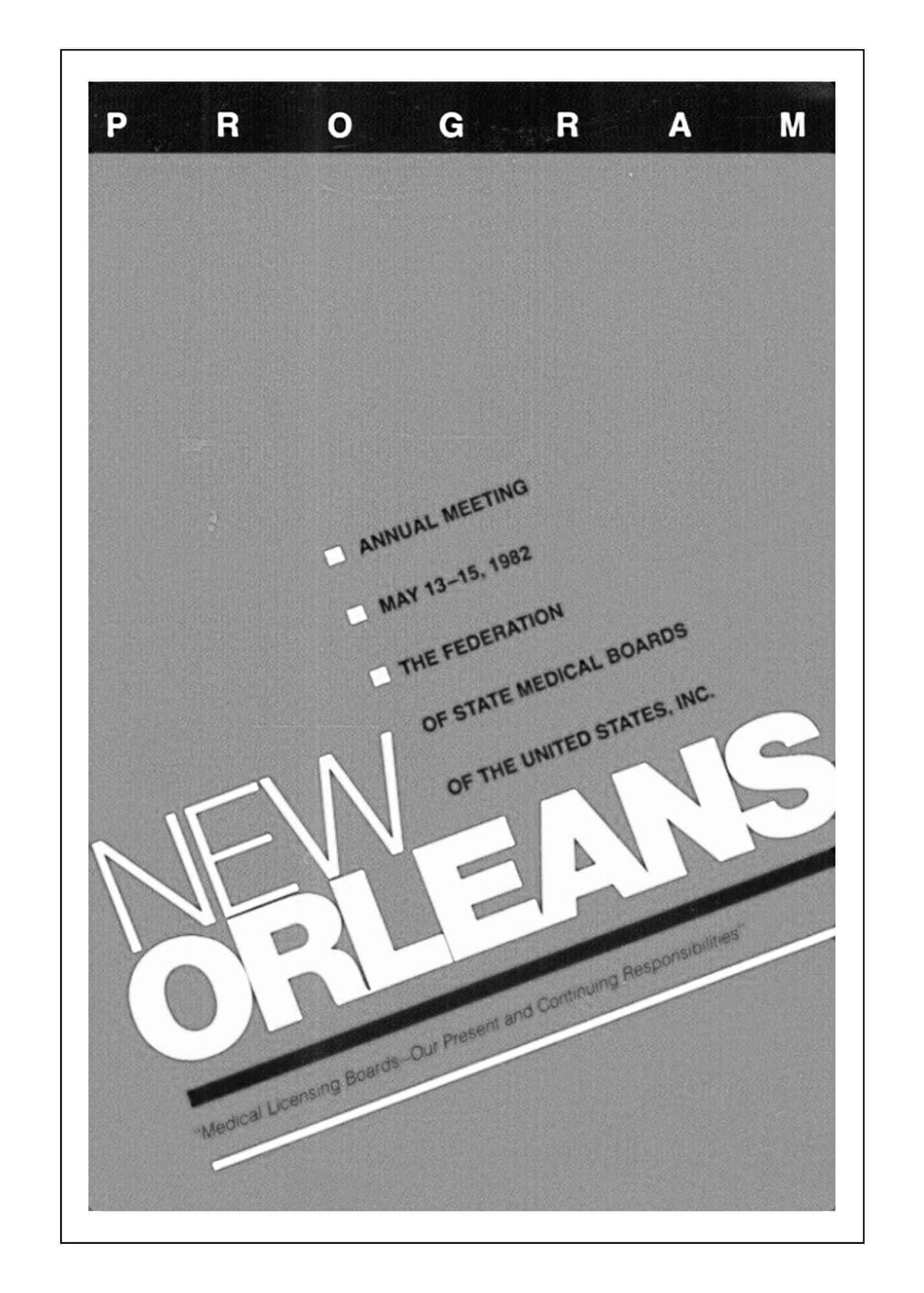
1982
The FSMB holds its first Annual Meeting separate from the AMA, convening in New Orleans, Louisiana.
(Pictured: FSMB 2017 Annual Meeting, Fort Worth, TX)
1988
The Special Purpose Examination (SPEX) is introduced jointly by the FSMB and the National Board of Medical Examiners (NBME) to assess current or previously licensed physicians for purposes of licensure endorsement, reinstatement, or reactivation after a period of inactivity. In 1995, SPEX becomes the first medical licensing exam to transition from paper-based to computer-based delivery.
1991
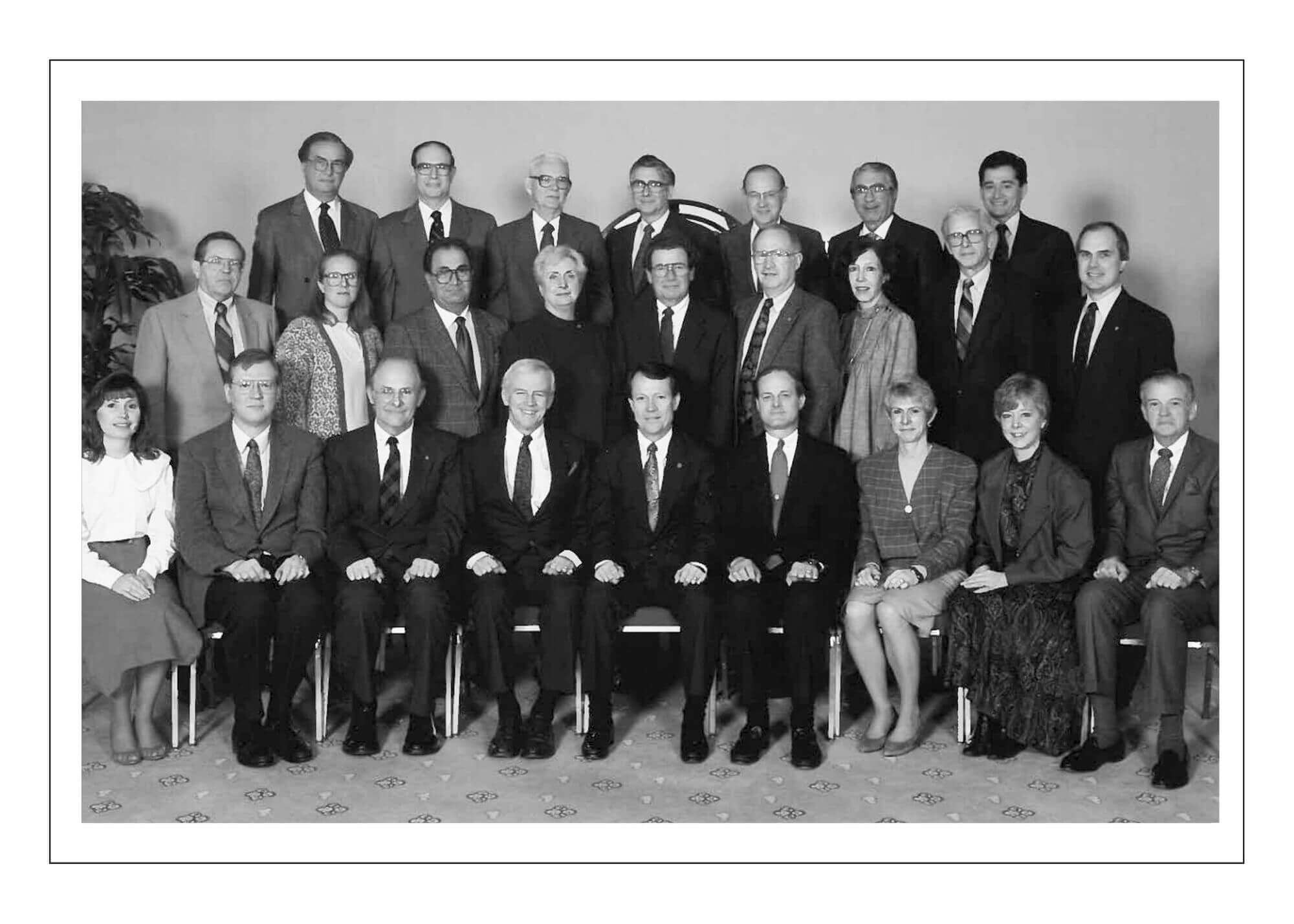
The United States Medical Licensing Examination (USMLE®) is created by the FSMB and NBME, replacing FLEX and the NBME Parts exams for initial medical licensure. The USMLE is open to students and graduates of accredited medical education programs and to international students and graduates eligible for ECFMG certification.
(Pictured: FSMB and NBME Board of Directors)
1994
The FSMB, in partnership with the U.S. Department of Health and Human Services, hosts the 1st International Conference on Medical Regulation in Washington, D.C. Regulatory authorities from Australia, Canada, Ireland, New Zealand, South Africa, Sweden, the United Kingdom, and the United States later come together to form the International Association of Medical Regulatory Authorities (IAMRA).
1995
The Federation Credentials Verification Service (FCVS) is established to create a permanent, lifetime portfolio of primary-source verified credentials that physicians can use for state licensure.
1999
The FSMB initiates its All-Licensed Physicians project to facilitate routine submission of updated licensure files from all state medical boards. This data supports other FSMB products and services, including data recovery after natural disasters, the FSMB's Disciplinary Alert Service, and ongoing research projects.
2000
The Disciplinary Alert Service is created to give state medical boards and others access to board actions within 24 hours of receipt by the FSMB.
2009
The FSMB introduces the Uniform Application (UA), designed to enhance the nation's state-based licensure system by eliminating the need for physicians, PAs, and resident applicants to re-enter information when applying for licenses in multiple states.
2010
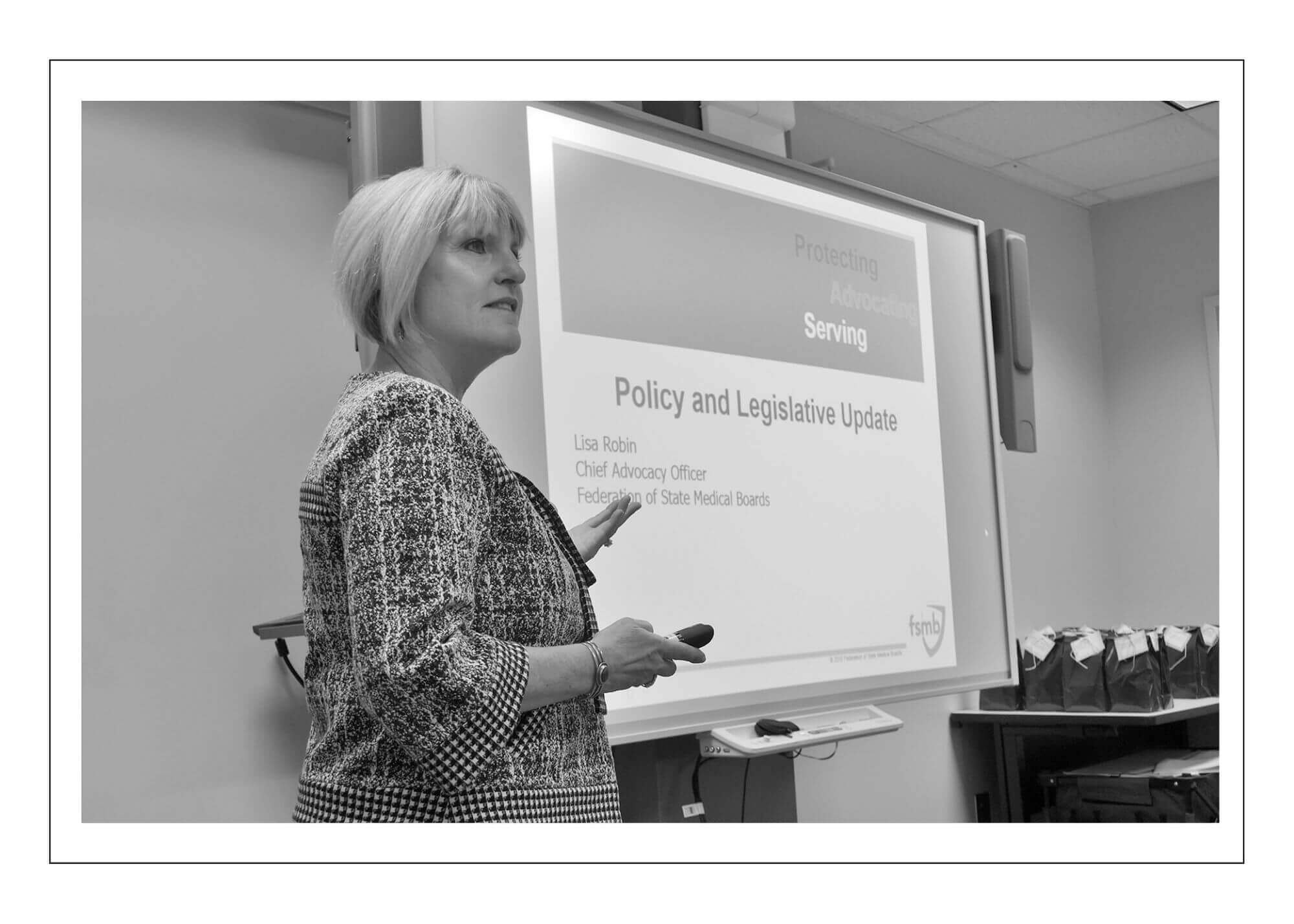
The FSMB opens a Washington, D.C., office to take a more proactive role in advocating for state and federal legislation impacting medical regulation.
(Pictured: FSMB’s first Chief Advocacy Officer Lisa Robin presenting to state medical board members)
2011
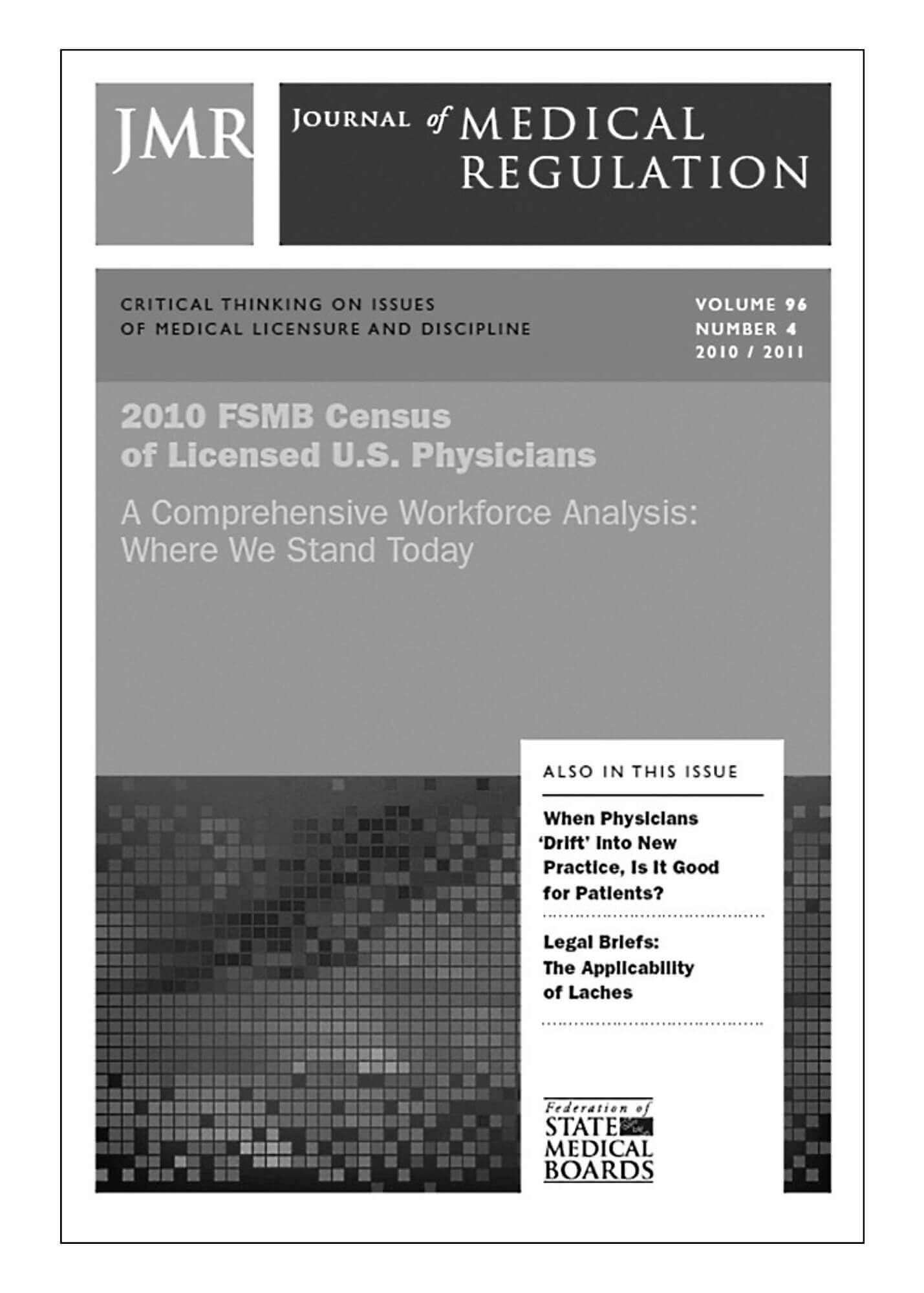
The FSMB publishes its inaugural “Census of Actively Licensed Physicians in the U.S.,” released biennially in the Journal of Medical Regulation. The FSMB also formalizes an advocacy partnership with the National Association of Boards of Pharmacy (NABP) and the National Council of State Boards of Nursing (NCSBN) through the creation of the Tri-Regulator Collaborative, whose combined member boards regulate five million physicians, pharmacists, and nurses across the U.S.
(Pictured: Journal of Medical Regulation cover, 2011)
2012
Medical Licensing and Discipline in America: A History of the Federation of State Medical Boards is published, chronicling the FSMB's journey and the centuries-long development of America's state-based medical licensure and disciplinary system.
2017
To help streamline the licensing process for physicians seeking to practice in multiple states, the FSMB helps launch the Interstate Medical Licensure Compact.
2021
The Opioid Regulatory Collaborative (ORC) is launched as a partnership of the FSMB, the American Association of Dental Boards (AADB), the National Association of Boards of Pharmacy (NABP), and the National Council of State Boards of Nursing (NCSBN) to address the nation's opioid epidemic.
2024
The FSMB joins Intealth™ and the Accreditation Council for Graduate Medical Education (ACGME) to form the Advisory Commission on Additional Licensing Models. The Commission provides guidance to states seeking to improve access to care by streamlining the licensure of international physicians who have already trained and practiced outside the United States.